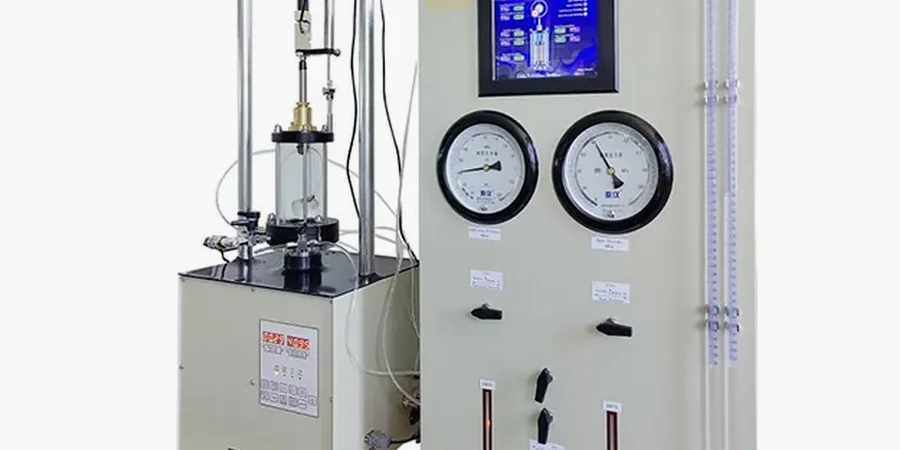
A three-story medical office building near Sierra Avenue was sitting on stiff alluvium, but the geotech report needed more than just blow counts. The owner wanted to push bearing capacity to the limit to avoid deep piles. That's the exact moment a triaxial test stops being a lab checkbox and becomes a project-saving exercise. In Fontana, where the subsurface jumps between loose sandy silts and overconsolidated clays from ancient alluvial fans, the CPT test gives us a continuous profile, but the triaxial gives us the effective stress parameters—c' and phi'—that govern how the soil actually behaves under load. Without that data, you're either overdesigning the foundations or, worse, making assumptions that don't hold when the water table rises after a heavy rain cycle in the Cucamonga basin. We run these tests in our AASHTO-accredited lab with local soil from your borehole, not generic samples from a catalog.
If you're designing a retaining wall with 20 feet of unbalanced fill and you don't have CD triaxial data, you're guessing on the friction angle—and that guess can cost you a shear key.