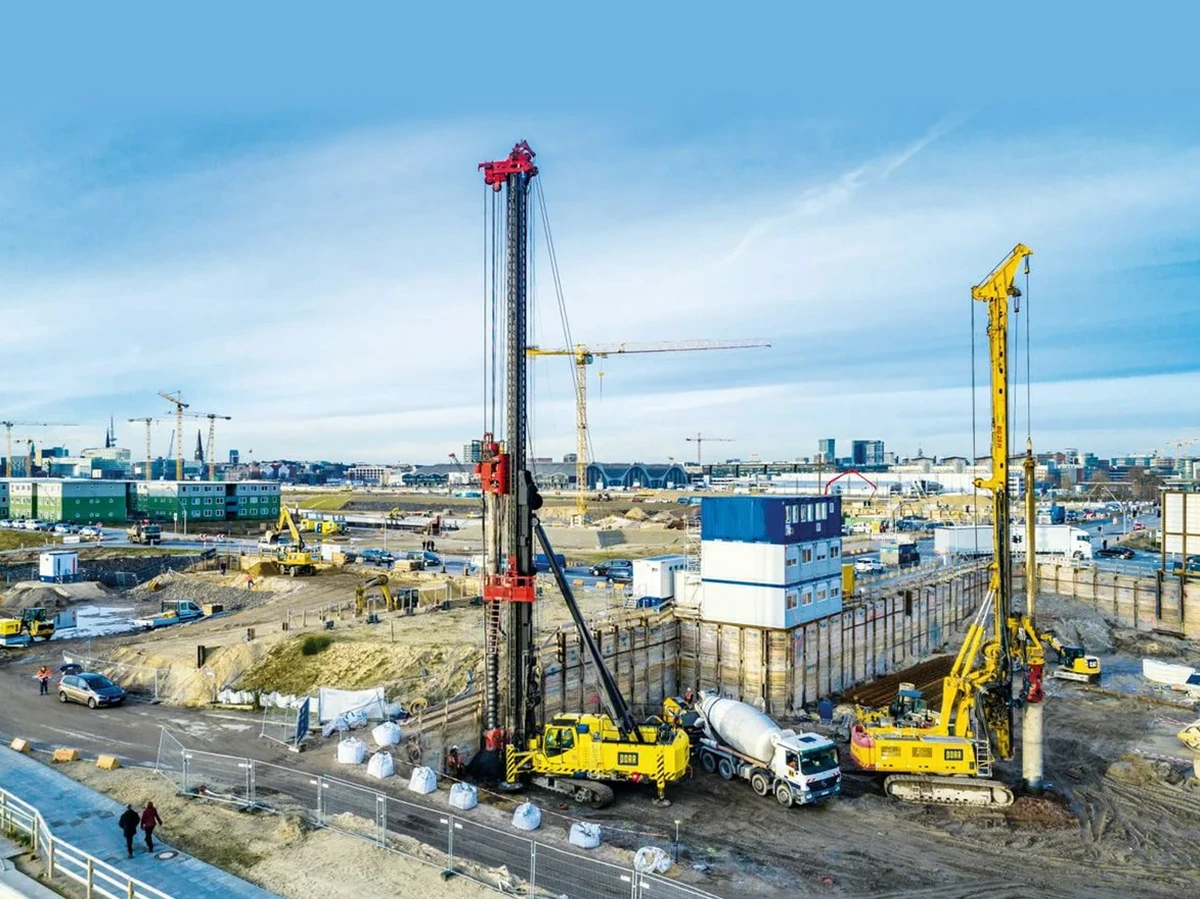
In the dynamic and expanding city of Fontana, California, the integrity of any construction project begins with a robust and meticulously designed foundation. This category encompasses the critical engineering discipline focused on transferring structural loads from a building to the underlying earth in a safe and predictable manner. Given Fontana's position at the convergence of major transportation arteries and its rapid residential and industrial growth, the demand for reliable foundation solutions is paramount. A comprehensive approach to foundations is not merely a construction phase; it is a risk-mitigation strategy that addresses site-specific challenges, ensuring longevity and safety for everything from single-family homes to massive logistics centers.
The local geology of Fontana presents a unique set of conditions that heavily influence foundation design. Much of the city is situated on the alluvial fans of Lytle Creek and the San Gabriel Mountains, resulting in heterogeneous soil profiles composed of sands, gravels, and silty deposits. Crucially, the area is within the seismically active Inland Empire region, with proximity to major fault lines like the San Jacinto and San Andreas faults. This brings significant challenges related to liquefaction potential, where loose, saturated sandy soils can lose strength and behave like a liquid during an earthquake. Furthermore, the presence of collapsible soils in some areas requires specialized analysis to prevent sudden settlement upon wetting, making a deep understanding of local geotechnical hazards non-negotiable for any foundation engineer working in Fontana.
Navigating the regulatory landscape is a cornerstone of responsible foundation engineering in the United States, and Fontana projects must adhere to the stringent standards of the California Building Code (CBC), which is based on the International Building Code (IBC). Chapter 18 of the CBC, specifically addressing Soils and Foundations, is the governing document, incorporating by reference ASCE 7 for seismic design criteria. These regulations dictate the minimum requirements for geotechnical investigations, allowable bearing pressures, and settlement tolerances. For deep foundation systems, such as pile foundation design, compliance with the 2021 International Building Code and the associated ACI 318 standards for concrete is mandatory. These codes ensure that designs account for seismic forces, soil-structure interaction, and the high wind loads that can affect the region's vast warehouse developments.
The types of projects in Fontana that demand expert foundation services are diverse and reflect the city’s economic landscape. The booming logistics sector, characterized by enormous distribution centers and warehouses, requires deep foundations capable of supporting heavy racking systems and dynamic forklift traffic without differential settlement. Residential developments, from master-planned communities to custom homes in hillside areas, often encounter expansive clay soils or require specialized solutions like pile foundation design to reach stable bearing strata. Public infrastructure projects, including bridges, overpasses for the extensive rail networks, and water treatment facilities, rely on sophisticated foundation systems designed for a 100-year service life. Each of these project types begins with a critical first step: a thorough geotechnical investigation that informs a foundation strategy tailored to both the structural loads and the complex Fontana subsurface environment.
The primary concern is seismic activity and its secondary effect, liquefaction. Fontana's location on loose alluvial soils means a major earthquake could cause the ground to lose strength, devastating a poorly designed foundation. A thorough geotechnical report must analyze the site's liquefaction potential to determine if deep foundations or ground improvement are required.
The California Building Code (CBC) mandates site-specific geotechnical investigations for most structures. It dictates the minimum earthquake design forces based on the site's soil class and proximity to faults. Your engineer must use these parameters to calculate bearing capacity and settlement, ensuring the foundation design legally meets state safety requirements for seismic and wind loads.
Deep foundations, like piles, are typically required when near-surface soils are too weak, highly compressible, or have high liquefaction risk. Warning signs from a geotechnical report include very low allowable bearing pressure, predicted total or differential settlement exceeding structural tolerances, or the presence of undocumented fill and organic debris at the building pad elevation.
The process starts with a desktop study and subsurface exploration using borings or test pits to sample the soil. Laboratory tests measure strength, compressibility, and chemical properties. The geotechnical engineer then synthesizes this data into a report providing design recommendations for bearing capacity, lateral earth pressures, and specific construction considerations for the unique Fontana site conditions.