The integrity of a transportation network begins with what lies beneath the asphalt and concrete. In Fontana, California, roadway engineering is a comprehensive discipline that encompasses the analysis, design, and structural evaluation of pavement systems intended to withstand the region's unique environmental and logistical demands. This category covers everything from the geotechnical investigation of subgrade soils to the structural design of surface layers that must endure heavy truck traffic from the Inland Empire's vast warehouse and logistics corridors. A properly engineered roadway ensures safety, longevity, and cost-efficiency, reducing the need for frequent maintenance and preventing catastrophic failures caused by subgrade instability or inadequate thickness.
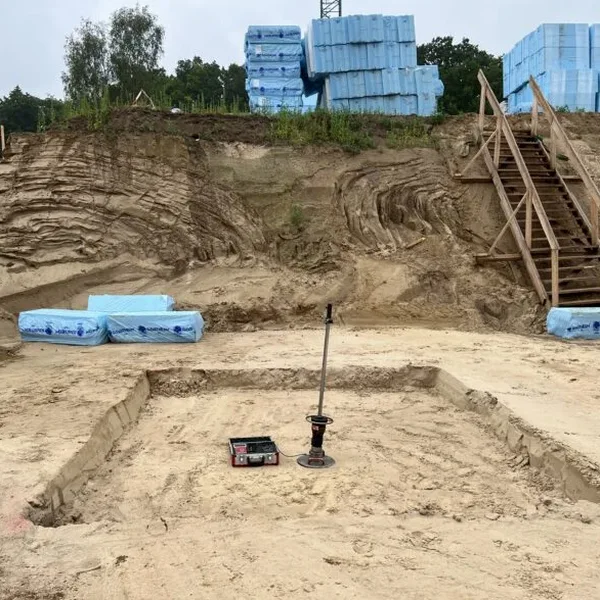
Fontana’s local geology presents distinct challenges that make specialized roadway design non-negotiable. Much of the area sits on alluvial fan deposits composed of sandy and silty soils with varying degrees of cohesion. These granular materials can be particularly susceptible to erosion and settlement if not properly compacted or stabilized. Additionally, the presence of expansive clays in certain pockets of the city introduces a risk of volumetric changes due to moisture fluctuation, which can lead to severe cracking in both flexible and rigid surfaces. A thorough understanding of these subsurface conditions is critical, often requiring a detailed CBR study for road design to quantify the load-bearing capacity of the native soil and determine the necessary structural reinforcement.
Compliance with national and state standards governs every phase of a roadway project in Fontana. The American Association of State Highway and Transportation Officials (AASHTO) provides the foundational design methodology, specifically the AASHTO 1993 Guide for Design of Pavement Structures, which remains the industry standard for calculating traffic loads and structural numbers. These guidelines are strictly enforced through the Caltrans Highway Design Manual and the Standard Specifications for Public Works Construction, commonly known as the Greenbook, which dictate material quality, compaction requirements, and safety tolerances for municipal projects. Adherence to these regulations ensures that Fontana’s infrastructure meets the rigorous demands of both residential streets and arterial industrial routes.
The types of projects requiring advanced roadway engineering in Fontana range from municipal street rehabilitation to heavy-duty commercial developments. For high-traffic intersections and bus lanes, rigid pavement design is often specified due to its superior durability and resistance to deformation under static loads. Conversely, for the vast stretches of residential roads and flexible warehouse access points, flexible pavement design offers a cost-effective solution that distributes traffic loads through multiple granular layers. Whether a developer is planning a new distribution center requiring a CBR study for road design to support thousands of daily truck trips, or the city is resurfacing a deteriorated collector street, the underlying engineering must be tailored to the specific site conditions and anticipated traffic indices to ensure a sustainable lifecycle.
Flexible pavements, typically asphalt, distribute loads through a layered granular structure relying on grain-to-grain contact, while rigid pavements, made of Portland cement concrete, use the slab's structural stiffness to bridge minor subgrade imperfections. The choice depends on traffic loading, soil conditions, and long-term maintenance strategies for the specific Fontana roadway project.
Fontana's geology features highly variable alluvial soils and potential expansive clays. A site-specific investigation identifies the soil’s physical properties, compaction potential, and drainage characteristics. Without this data, designs risk premature failure from differential settlement or swelling, making empirical data from a CBR analysis essential for calibrated structural thickness.
The AASHTO Guide for Design of Pavement Structures is the primary national standard, providing the empirical methodology for calculating structural numbers. In Fontana, this is supplemented by the Caltrans Highway Design Manual and local Public Works standards, which dictate specific material specifications and safety factors for all public and private roadway construction.
Heavy truck traffic significantly increases the Equivalent Single Axle Loads (ESALs) a pavement must sustain. Designers must accurately forecast this loading to prevent rutting and fatigue cracking. This often requires a thicker structural section and a higher-quality base material, specifically engineered to resist the shear stresses imposed by constant container truck movements.