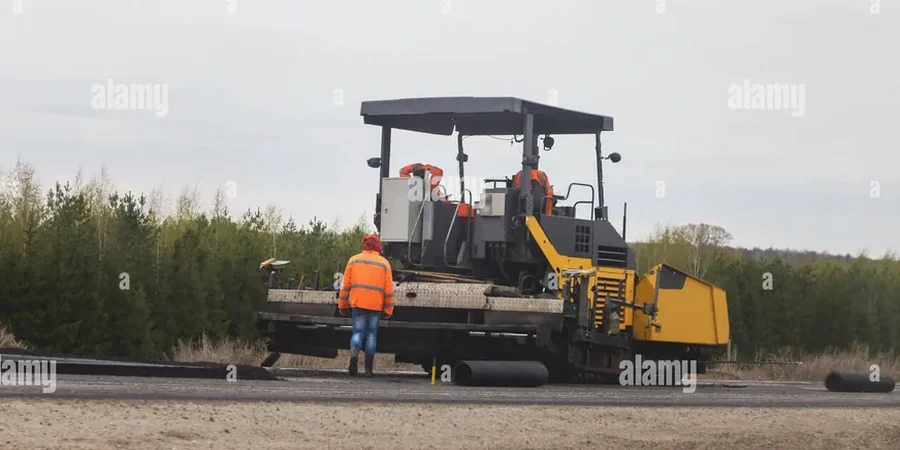
When we mobilize the nuclear density gauge and the heavy-weight deflectometer along the I-10 corridor in Fontana, the conversation shifts immediately to the subgrade. Flexible pavement design here is not a catalog exercise. The alluvial fan deposits from Lytle Creek have created a subsurface mosaic of silty sands, loose gravels, and pockets of expansive clay that demand a careful structural coefficient analysis. In our experience, the asphalt layer thickness is only as reliable as the characterization of what lies beneath it. We combine dynamic cone penetrometer readings with laboratory CBR values to build a structural number that accounts for the 100°F-plus summer pavement temperatures common in the Inland Empire. A pavement section designed without considering the thermal gradient in the asphalt concrete layer will rut prematurely, and Fontana’s logistics hubs with constant truck traffic expose any design shortcut within the first two years of service.
A flexible pavement is a layered elastic system where the subgrade’s resilient modulus governs everything above it; ignoring seasonal moisture variation in Fontana’s silty soils is the fastest path to fatigue cracking.
Local geotechnical context
A 450,000-square-foot warehouse project off Slover Avenue taught us a lesson we carry into every flexible pavement design in Fontana. The geotechnical investigation identified a lens of fat clay at four feet depth under the proposed truck court, but the preliminary pavement design had assumed a uniform sandy subgrade. Without adjusting the structural section, the differential heave during the first wet winter would have created a washboard surface capable of damaging trailer landing gear. We redesigned the section with a thicker aggregate base, a geotextile separator, and lime treatment of the upper subgrade to control the plasticity index. The lesson is that a pavement is a structural system interacting with the ground, not a waterproofing membrane. In Fontana, where the annual precipitation is modest but comes in concentrated storm events, the drainage of the base course and the protection of the subgrade from moisture intrusion are as important as the asphalt thickness itself.
Quick answers
What is the typical cost range for a flexible pavement design in Fontana?
How does the high summer heat in Fontana affect flexible pavement design?
The asphalt concrete stiffness is highly temperature-dependent. At surface temperatures exceeding 120°F, the effective structural contribution of the asphalt layer decreases, shifting more load to the base and subgrade. Our designs incorporate the local temperature gradient to select the appropriate asphalt binder performance grade, typically PG 70-10 or higher for the Inland Empire, and we adjust the layer coefficients used in the structural number calculation accordingly.
What traffic data is needed for a pavement design on a warehouse truck court?
We need the average daily truck traffic by axle configuration, the directional distribution, the lane distribution factor, and the projected growth rate over the design life. For a distribution center in Fontana, the heavy vehicle mix often includes Class 9 five-axle tractor-semitrailers with loads near the legal limit, which translates to ESAL factors between 1.5 and 2.5 per truck pass.
How is the subgrade resilient modulus determined for the design?
The resilient modulus is typically correlated from laboratory CBR tests or measured directly through repeated load triaxial testing. For Fontana’s alluvial soils, we use the Caltrans correlation Mr (psi) = 2555 x CBR^0.64 as a starting point and validate it with falling weight deflectometer back-calculation on test sections when the project budget allows a more refined analysis.