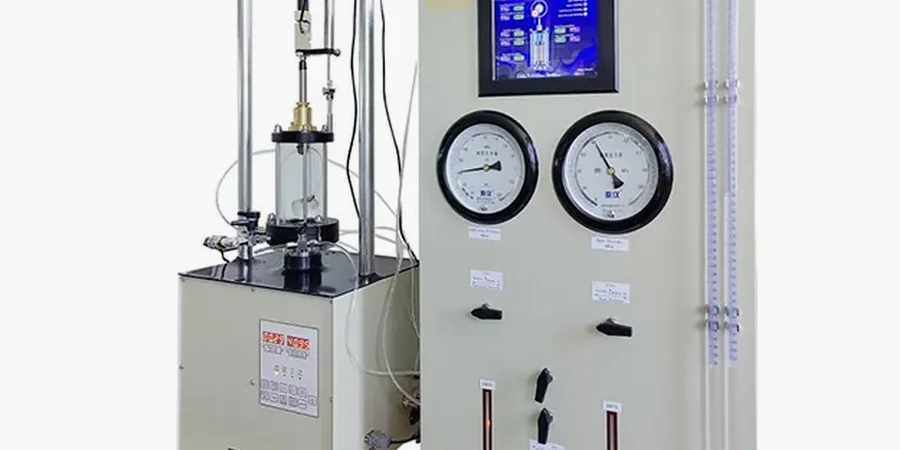
Geotechnical laboratory testing forms the backbone of any successful construction or infrastructure project in Fontana, California. This category encompasses the controlled analysis of soil and aggregate samples to determine their physical and engineering properties, moving far beyond simple visual classification. Accurate lab data is the only way to reliably predict how the ground will behave under the loads imposed by buildings, roads, and retaining structures. Without this critical phase, foundation designs are mere estimates, exposing projects to risks like differential settlement, slope instability, or premature pavement failure. In a city experiencing continuous commercial and residential growth, investing in a rigorous laboratory program is not an option; it is a fundamental requirement for structural integrity and public safety.
Fontana's geological setting makes comprehensive lab work particularly vital. Much of the city is built upon ancient alluvial fans and floodplain deposits originating from the nearby San Gabriel and San Bernardino Mountains. These soils are notoriously heterogeneous, often containing unpredictable mixtures of sands, silts, and gravels deposited by historic water flows. Furthermore, the region's arid climate can lead to the formation of desiccated, hard clays near the surface, underlain by collapsible soils that can rapidly consolidate when wetted. A standard penetration test in the field might only capture a snapshot, but a detailed laboratory analysis, including Atterberg limits testing, is required to identify the expansive potential of these clay layers, which can exert significant uplift pressure on foundations during the wet season.
Adherence to nationally recognized standards is the non-negotiable foundation of every test performed in this category. All laboratory procedures strictly follow the specifications set by ASTM International, with key methods including ASTM D422 for particle-size analysis and ASTM D4318 for the liquid and plastic limits of soils. For projects that involve state or county oversight, such as road improvements along Sierra Avenue or public works, we also ensure full compliance with the California Test Methods (CTM) published by Caltrans. A complete grain size analysis (sieve + hydrometer) is a prime example of a foundational test that must be executed precisely according to these standards to produce a valid grain size distribution curve, which is essential for drainage design and soil classification under the Unified Soil Classification System (USCS).
This category of testing is indispensable across a wide spectrum of projects in Fontana. Large-scale logistics centers and warehouses in the industrial corridors depend on laboratory-derived compaction curves (Proctor tests) and California Bearing Ratio (CBR) values to design floor slabs and heavy-duty pavements that can withstand constant forklift traffic. Residential subdivisions in the northern foothills require direct shear tests to assess slope stability, while consolidation tests predict the settlement of embankments for bridge approaches and sound walls along the I-15 and I-10 freeways. Even smaller commercial developments on Foothill Boulevard rely on sulfate content testing to specify the correct sulfate-resistant cement type for concrete foundations, preventing long-term chemical degradation. Each project type presents unique geotechnical questions that only a targeted laboratory investigation can answer.
The primary purpose is to determine the physical, mechanical, and chemical properties of soil and rock samples under controlled conditions. This data is essential for classifying soils accurately, predicting their behavior under structural loads, and providing engineers with the precise parameters needed to design safe, cost-effective foundations, earthworks, and pavements.
Fontana's alluvial soils often contain expansive clays and collapsible silty layers. This requires a focus on specific tests like Atterberg limits to identify swelling potential and consolidation tests to measure settlement. The heterogeneous nature of these deposits means a comprehensive suite of tests is often necessary to capture the variability across a single project site.
Laboratory testing procedures must strictly adhere to ASTM International standards, such as ASTM D4318 and ASTM D422. For projects involving state funding or highway systems, additional compliance with the California Test Methods (CTM) published by Caltrans is mandatory to ensure results are legally defensible and accepted by reviewing agencies.
Field testing, like the Standard Penetration Test, provides an in-situ assessment of soil density and consistency but cannot directly measure engineering properties. Laboratory testing provides controlled, quantitative analysis of disturbed or undisturbed samples to determine specific values like shear strength, permeability, compressibility, and maximum dry density, which are critical for design calculations.