← Home · Laboratory

Laboratory CBR Testing in Fontana, CA: Pavement Design Starts Here

Together, we solve the challenges of tomorrow.

LEARN MORE →

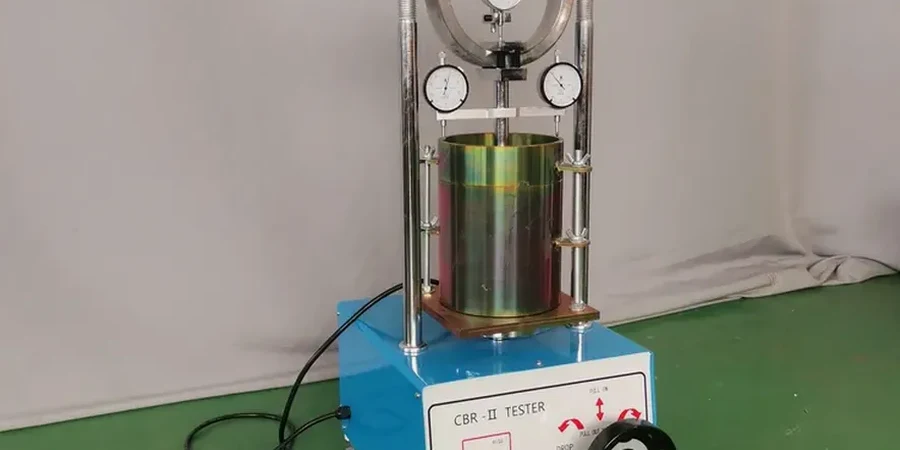
Anyone who has graded a site north of Foothill Boulevard knows the soil changes fast in Fontana. What looks like decent fill can turn to mush under traffic load if the subgrade doesn't have the strength. That's where the California Bearing Ratio test comes in. It's not a formality. It's a direct measurement of how much punishment your subgrade or base course can take before it fails. We run the laboratory CBR test right here, using compacted specimens at optimum moisture, and we soak them to simulate the worst conditions a Fontana pavement will ever see. For deeper stratigraphy questions, we often pair this with SPT drilling to get a complete picture of the subsurface before the asphalt goes down.

A soaked CBR value below 3% on a Fontana subgrade means you're building your pavement on a sponge. The number forces the conversation about stabilization.
How we work

The soil profile between the Jurupa Hills and the old Kaiser Steel mill site varies dramatically. In the southern industrial corridor, we see coarse alluvial fans with good drainage but variable compaction. North of the 210, the fines content increases, and that changes everything for a pavement section. Our laboratory CBR test follows ASTM D1883 exactly: a 3-point compaction curve, a 96-hour soak, and a piston pushing at 0.05 inches per minute. We measure the pressure at 0.1-inch and 0.2-inch penetration and compare it to the standard crushed stone reference. The result isn't just a number. It tells the design engineer whether to thicken the aggregate base, stabilize the subgrade with cement, or switch to a full-depth asphalt section. When the fines are high and the plasticity is borderline, we also recommend running Atterberg limits to confirm the material isn't going to pump water up into the pavement structure with every truck that passes.
Laboratory CBR Testing in Fontana, CA: Pavement Design Starts Here
Technical reference image — Fontana

Local geotechnical context

The AASHTO 1993 pavement design guide is still the backbone of most municipal standards in San Bernardino County, and it relies heavily on the CBR value. Guessing the CBR is a gamble. Overestimate it, and you get rutting and fatigue cracking within two years. Underestimate it, and you overbuild the pavement section, wasting tens of thousands of dollars in aggregate and asphalt. Fontana's hot, dry summers and occasional intense winter rains create a wet-dry cycle that can degrade untreated subgrades fast. A laboratory CBR test that includes a 96-hour soak simulates this saturation and gives a conservative, defensible number. It's the difference between a pavement that survives the first monsoon season and one that requires a costly overlay before the project is even off warranty.

Need a geotechnical assessment?

Reply within 24h.

Email: contact@geotechnicalengineering1.com

Technical parameters

ParameterTypical value
Test standardASTM D1883-21
Specimen compactionModified Proctor (ASTM D1557) at optimum moisture
Soaking period96 hours with surcharge weights
Penetration rate0.05 in/min (1.27 mm/min)
Key readingsCBR at 0.1-inch and 0.2-inch penetration
Specimen diameter6 inches (152.4 mm)
Typical applicationPavement structural design per AASHTO 1993

Other technical services

01

Standard Laboratory CBR

Three-point compaction and 96-hour soak for one soil type. Includes swell measurement and CBR at two penetration depths.

02

CBR with Lime/Cement Stabilization

Testing the CBR of soil mixed with 3%, 5%, or 7% stabilizer to optimize the pavement section and reduce aggregate thickness.

03

Field CBR Correlation

Paired with a dynamic cone penetrometer (DCP) in the field to correlate lab values with in-situ conditions across the site.

04

R-Value Conversion

Converting CBR results to R-values for Caltrans pavement design procedures when required by the local jurisdiction.

Applicable standards

ASTM D1883-21: Standard Test Method for California Bearing Ratio (CBR) of Laboratory-Compacted Soils, ASTM D1557-12: Standard Test Methods for Laboratory Compaction Characteristics of Soil Using Modified Effort, AASHTO T 193: The California Bearing Ratio, AASHTO 1993 Guide for Design of Pavement Structures

Quick answers

What is the difference between a laboratory CBR and a field CBR test?

A laboratory CBR test is performed on a remolded, compacted sample under controlled moisture and density conditions, including a 96-hour soak to simulate saturation. A field CBR test uses a portable apparatus on the in-situ soil. The lab value is always more conservative and is the standard input for pavement thickness design per AASHTO 1993.

How much does a laboratory CBR test cost in Fontana?
How long does it take to get the CBR results?

The minimum turnaround is 5 to 7 business days. The 96-hour soak is mandatory per ASTM D1883, and the compaction curve preparation adds another day. Rush processing is sometimes available if the lab schedule permits.

What CBR value do I need for a warehouse parking lot in Fontana?

For a warehouse with heavy truck traffic, the structural design typically requires a minimum soaked CBR of 10% to 15% in the upper 12 inches of subgrade. Values below 5% almost always require stabilization or a thicker aggregate base to protect the asphalt from bottom-up fatigue cracking under repeated axle loads.

Location and service area

We serve projects across Fontana and surrounding areas.

View larger map