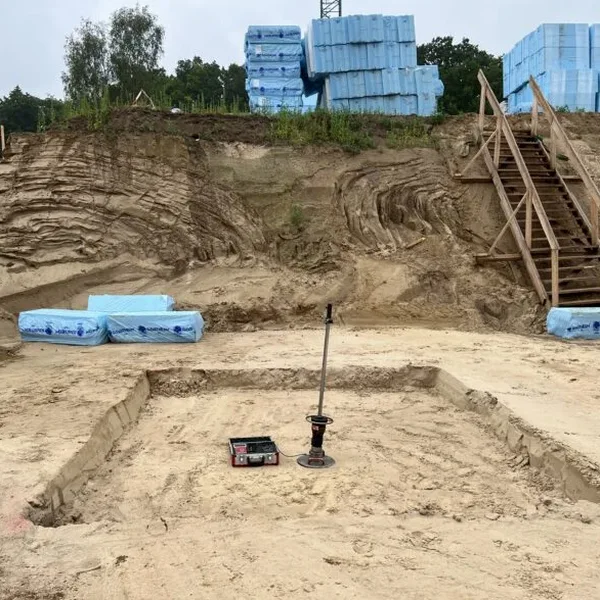
The mechanical compactor drops its 5.5-pound hammer onto the soil inside a standard 4-inch mold, hitting it 25 times per layer from a controlled 12-inch height. That rhythmic thud echoing through our Fontana lab is the sound of a Standard Proctor test (ASTM D698) taking shape. When the job calls for higher energy, the modified hammer delivers 10 pounds of force over an 18-inch drop, packing soil into a 6-inch mold under ASTM D1557. In a city where weak alluvial fan deposits and weathered granitic colluvium from the nearby Jurupa Hills meet high seismic demands, hitting the right compaction curve is not just a spec box to tick: it defines whether a pad will settle unevenly under the 100-degree summer heat. Our technicians run these tests daily for Fontana projects ranging from warehouse tilt-ups south of the I-10 to residential subdivisions pushing into the northern foothills.
A two-percent moisture deviation in Fontana's sandy silt can cut the dry density by more than 4 pounds per cubic foot, erasing the safety margin on a compacted pad.
Local geotechnical context
The most common mistake we see on Fontana earthwork jobs is a contractor running a Modified Proctor on soil that the geotechnical engineer intended to be compacted using Standard effort, then wondering why the field density tests keep failing. The higher compactive energy of the Modified test pushes the optimum moisture content down and the maximum dry density up; if the field crew tries to match that curve with a smooth-drum roller making four passes, they will never hit the number. Worse, some crews add water to chase an artificially high optimum, over-saturating Fontana's silty fill and triggering pore pressure buildup that goes undetected until the first heavy rain season. A second costly shortcut is skipping the one-point Proctor correlation during utility trench backfill: using a generic curve from a different borrow source on the same site can approve density that is four to six percent below the true standard, leaving buried storm drains and sewer laterals supported by fill that consolidates unevenly over time.