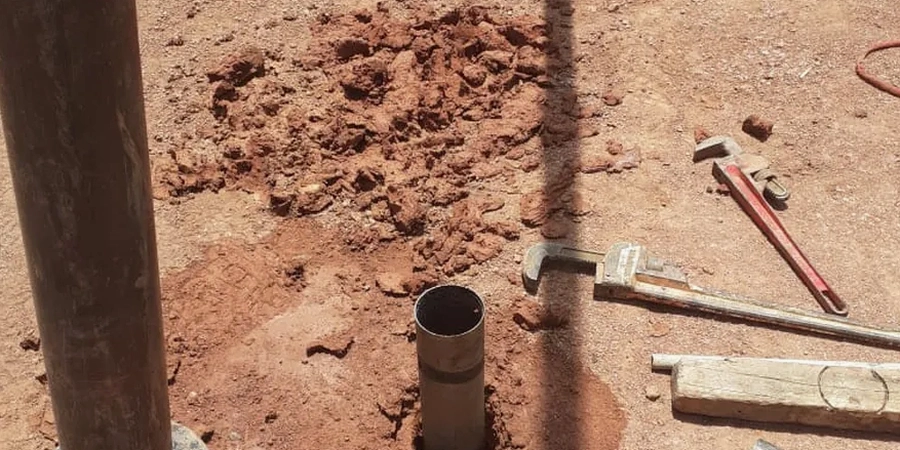
Fontana sits at 1,237 feet elevation in the Inland Empire, where alluvial fan deposits from the San Gabriel Mountains dictate subsurface drainage patterns. With 215,000 residents and over 40 square miles of industrial and residential expansion, groundwater behavior is a make-or-break factor for deep foundations and retaining structures. Lugeon and Lefranc tests provide direct in-situ hydraulic conductivity values that lab permeameters on Shelby tubes simply cannot replicate. The City of Fontana Public Works requires site-specific infiltration data for stormwater compliance on commercial parcels, making these tests a practical necessity rather than an academic checkbox. Our team has run hundreds of packer tests across the Rancho Cucamonga-Fontana corridor and knows the difference between a clean sand that drains freely and a silty matrix that holds water under pressure. For projects near the Kaiser complex or along Sierra Avenue, we often pair permeability profiles with CPT testing to correlate soil behavior type with real conductivity measurements.
A 1x10^-6 cm/s field measurement versus a 5x10^-5 cm/s lab estimate changes dewatering design from wellpoints to deep wells—that is the cost of guessing.
Quick answers
What is the difference between a Lefranc test and a Lugeon test?
A Lefranc test measures hydraulic conductivity in soil or very soft rock using a slotted standpipe or single packer, typically under a constant or falling head. It is suited to unconsolidated materials like the alluvium found across Fontana. A Lugeon test is designed for fractured rock masses and applies five pressure steps to assess how fractures open, close, or erode under hydraulic load. The Lugeon value (1 Lugeon unit ≈ 1x10^-7 m/s) quantifies rock mass permeability and is standard for dam foundation and grouting projects.
How long does a field permeability test take?
A single-interval Lefranc test in granular soil can stabilize in 20–40 minutes. Low-permeability silts or clays may require two to four hours to reach steady-state flow. A complete five-stage Lugeon test in rock typically runs three to five hours per interval, depending on fracture response and pressure-step duration. We schedule one to two test intervals per drilling day to ensure data quality.
What does a permeability test cost in Fontana?
Can lab permeability tests replace field tests?
Lab permeameter tests on undisturbed samples are useful for index comparison, but they test a 2.5-inch diameter specimen under idealized conditions. They miss fractures, macropores, thin sand seams, and anisotropic flow paths that dominate real ground behavior. In Fontana's layered alluvium—where a 6-inch sand seam can carry 100 times the flow of the surrounding silty matrix—field tests are the only reliable basis for dewatering and drainage design.