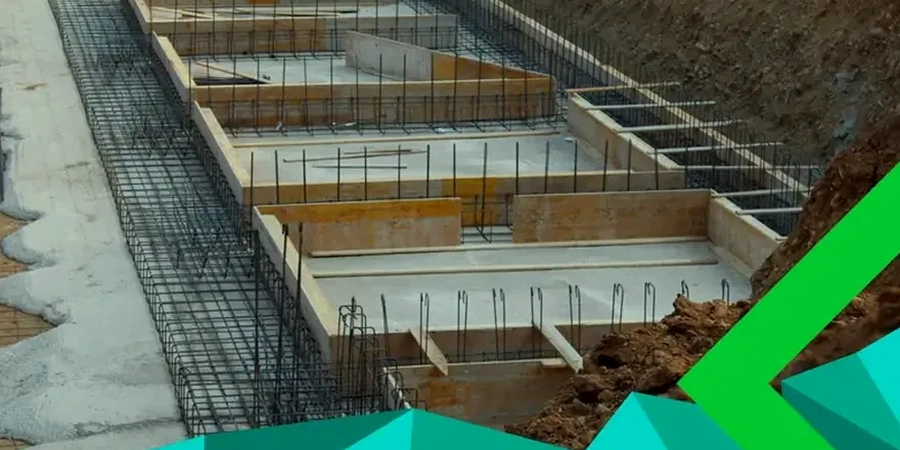
Fontana sits at approximately 1,200 feet above sea level where the ancient alluvial fans of the San Gabriel Mountains meet the Inland Empire basin, a transition zone that creates some of the most variable subsurface conditions in Southern California. The city's explosive growth from a rural community of under 5,000 in the 1940s to over 210,000 residents today has pushed development onto increasingly complex deposits where competent granular soils can shift to compressible silts and expansive clays within a single lot. Shallow foundation design in Fontana demands far more than a presumptive bearing pressure—it requires a systematic investigation calibrated to the specific geomorphology of each site. The technical team integrates SPT drilling data with laboratory index testing to develop ground models that capture the vertical and lateral variability typical of the Lytle Creek and Etiwanda fan deposits, ensuring that bearing capacity calculations reflect actual stratigraphy rather than idealized assumptions.
In Fontana's alluvial transition zone, the difference between a reliable shallow foundation and a serviceability problem is often captured in the three vertical feet between SPT spoon samples.
Quick answers
What bearing capacity can I assume for a shallow foundation in Fontana?
There is no single presumptive value that applies across Fontana because the alluvial fan deposits vary dramatically over short distances. Allowable bearing capacities for spread footings in the area typically range from 1,500 psf for stiff silty clays to over 3,500 psf for dense sands and gravels found in older terrace deposits, but these numbers must be verified by site-specific SPT testing and laboratory strength analysis per ASTM D1586 and D2487. Footing width, embedment depth, and groundwater elevation all influence the final design value, and the governing failure mode may shift from bearing capacity to settlement on certain sites.
How much does a shallow foundation design study cost in Fontana?
Does Fontana have issues with expansive soils under shallow foundations?
Yes, expansive clay layers are well-documented in portions of Fontana, particularly in the finer-grained distal fan deposits south of Baseline Road and in areas underlain by the A-horizon of the Ramona-Placentia soil association. These soils can undergo significant volume changes with seasonal moisture fluctuation, which is why the design process includes Atterberg limits testing and expansion index determination per ASTM D4829. Where the expansion potential is classified as medium or high, the foundation recommendations may include deepened footings, moisture barrier systems, or chemical stabilization of the subgrade to mitigate heave risk.
What seismic provisions apply to shallow foundation design in Fontana?
Fontana falls within Seismic Design Category D per ASCE 7, which imposes specific requirements for foundation ties, reinforcement continuity, and overturning resistance in spread footings. The 2008 Chino Hills earthquake (M5.4) and the proximity to the San Jacinto fault system underscore the importance of liquefaction assessment in saturated granular layers—an evaluation performed using SPT-based methods per the NCEER/Youd-Idriss framework. Foundations must also satisfy the ductility and load path requirements of ACI 318 Chapter 18 and the California Building Code, particularly for structures assigned to Risk Category III or IV.